24 Nov
The short answer: a direct booking website lets guests check dates, see a clear total and pay on your own site. You keep the commission an online travel agency (OTA) would take. Lodges and outfitters cut OTA commission by keeping OTA listings for discovery. Then they give guests every reason to book direct: real availability, a fast checkout, perks only on your site, and email that brings past guests back. This guide covers each step.
1. Know what OTA commission costs you
Start with your own numbers. Pull last season’s bookings and split them by channel: Booking.com, Expedia, Airbnb, activity marketplaces, phone, email and your website. Then multiply each channel’s revenue by the commission in your contract.
Here is an example with made-up figures. If a lodge’s contract rate were 15%, a $2,400 three-night stay would cost $360 in commission. Fifty of those stays would be $18,000 a season.
Rates vary by contract, market and the extra programs you join, so use the rate on your own statements. The point is to see the total in dollars, not as a percentage that feels small.
2. Keep the OTAs, but change their job
OTAs are good at one thing: putting your property in front of travelers who have never heard of you. That is worth paying for.
Paying the same commission on a guest who stayed last year, or who already knows your name, is the part to fix. Our lodge marketing work starts here.
- First-time guests: let the OTA find them. Treat the commission as your cost to win a new guest.
- Repeat guests: they should book with you directly every time after the first stay.
- Guests who search your name: they should land on your site and be able to book there in a few taps.
Read your OTA contracts before you change prices on your site. Some include rate parity terms that limit how you price direct bookings, so perks often work better than discounts.
3. What a direct booking website needs
A guest who has to email to ask about dates will often go back to the OTA tab they left open. Your site has to make booking as easy as the OTA does. Here is the short list:
- A Book button on every page, including room, trip and package pages.
- Real availability, pulled from the same calendar your staff uses, so nobody books a full date.
- A clear total before payment, with taxes and fees shown, not added at the last step.
- A deposit option and a plain balance date, so guests know what they owe and when.
- Policies on the page: cancellation, weather, minimum stay and what is included.
- Fast pages on a phone. Most guests will look at your site on a phone first.
- Photos that answer questions: the rooms, the boats, the dining room, the view from the porch.
Our web design team builds sites around this list. The web design tips for outdoor brands post covers the basics if you are doing it yourself.
4. Rooms and trips are two different bookings
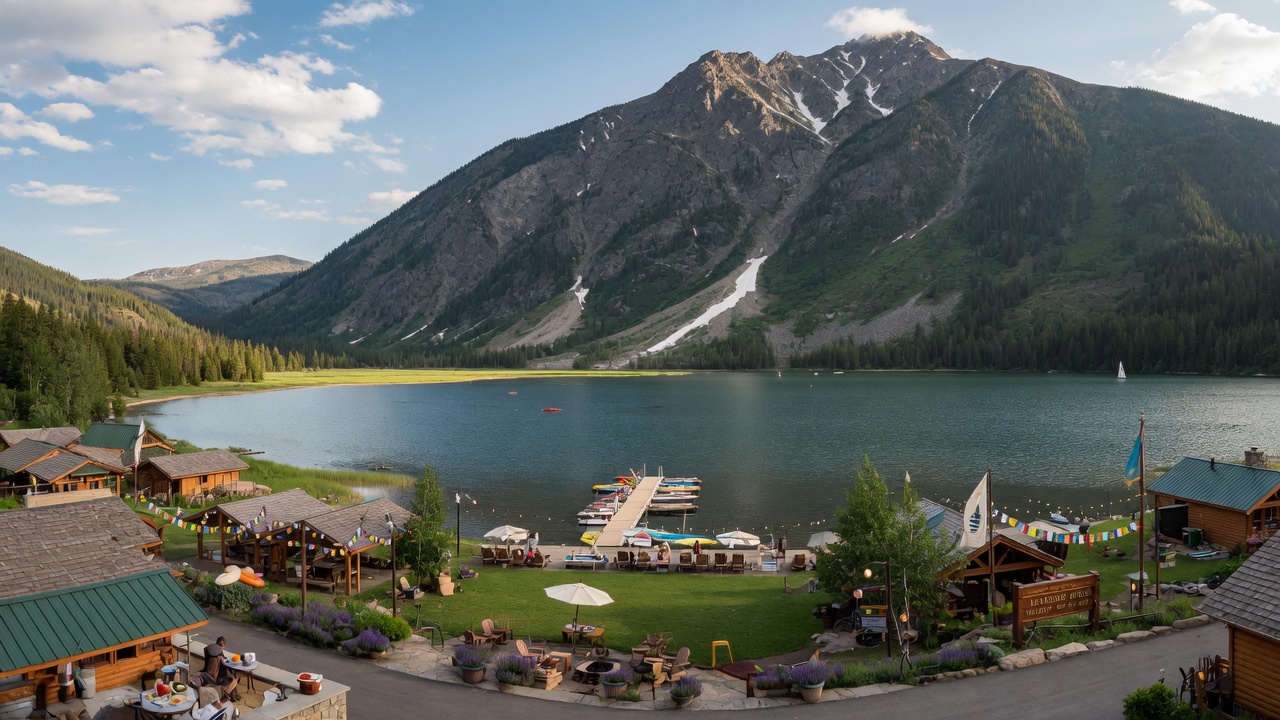
Many lodges and outfitters sell two things: nights and guided days. These usually need two tools, and that is fine as long as both live on your site.
- Rooms and nightly stays: use the booking engine that comes with your property management system, or one that connects to it. It keeps your room inventory in sync with the OTAs.
- Guided trips and activities: fishing days, hunts, floats and tours need a calendar built for trips, with deposits, waivers and guide schedules.
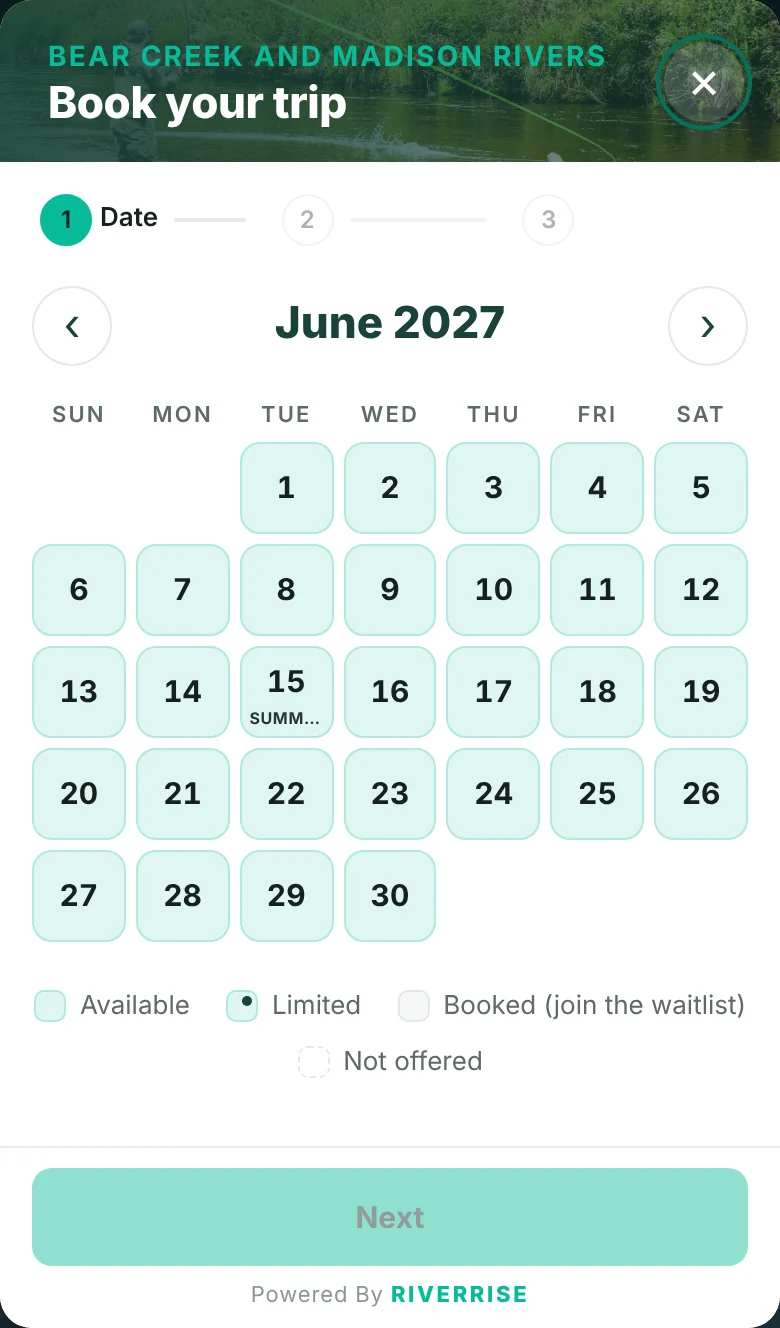
RIVERRISE BOOKINGS handles the second part. It is booking software for guided trips and activities that runs on your own website. It does not book rooms.
Guests pick a trip and date on a calendar, see a clear total and pay a deposit, and the balance date is spelled out.
There are no booking fees for you or your guests. It is $99 a month, month to month, and standard Stripe card processing applies. Deposits go straight to your own Stripe account.
5. Give guests a reason to book direct
A guest comparing your site with an OTA listing wants to know what they get for booking with you. Tell them on every booking page, in one short line. Ideas that do not touch your room rate:
- Early check-in or late checkout when it is available.
- A guided half day or activity offered only to direct guests.
- A welcome item from the lodge store or bar.
- Easier date changes, spelled out in your policy.
- A direct line to the person who plans their trip.
Pick one or two you can deliver every time. A perk that staff forget is worse than no perk.
Not sure how many of your bookings could come direct? Get a free growth audit. We review your website, Google Business Profile and booking flow, and show you where guests leave for an OTA.
6. Win the search for your own name
A guest who has stayed with you, or heard about you from a friend, often searches your lodge’s name. Search it yourself on a phone and see what comes up first. If an OTA listing sits above your own site, that guest may book there out of habit.
- Google Business Profile: make sure your website link and booking link are correct, and that photos and hours are current. Our Google Business Profile service covers this.
- Your homepage: put your lodge name, location and a Book button at the top.
- Brand search ads: a small Google Ads campaign on your own name can put your site above other listings. Judge it by direct bookings, not clicks.
For the wider picture, our SEO for tour operators guide covers how guides and outfitters get found on Google.
7. Bring past guests back to your site
Your cheapest booking is a guest who already loved the place. The catch is that OTA bookings do not always come with the guest’s own email address. Collect a real email and phone number at check-in, with permission to contact them.
Then send a few emails a year, each with a link to your own booking pages:
- A thank-you after the stay, with a photo or two.
- A note when next season’s dates open.
- A reminder ahead of the week they came last year.
A CRM makes this automatic. See our CRM and marketing automation service.
8. Measure direct share every month
Pick one number and track it: the share of bookings that came direct. Track it separately for rooms and for trips. If it is not moving, find out where guests drop off.
- Do guests click Book but not finish? Check the total, the steps and the phone experience.
- Do repeat guests still book through an OTA? Check your email list and your brand search results.
- Do trip guests call instead of booking? Check that open dates show on the trip page.
Compare what each channel costs per booking. An OTA booking costs its commission. A direct booking costs your website, software and marketing, spread across every guest who used them.
Direct booking website questions
How much is Booking.com commission?
It depends on your contract, your market and any extra visibility programs you join. Check the rate on your own invoices or extranet rather than a number you read online. Then multiply it by the stays you could move to direct bookings to see what is at stake.
Can a direct booking website replace OTAs completely?
For most lodges, no, and it does not need to, since OTAs bring guests who would never find you otherwise. The goal is to pay commission on new guests only. Repeat guests and people who search your name should book on your own site.
Can RIVERRISE build our direct booking setup?
Yes. We build lodge websites, set up search and email to drive direct bookings, and add RIVERRISE BOOKINGS for guided trips and activities. See our lodge and resort marketing services to get started.