18 Nov
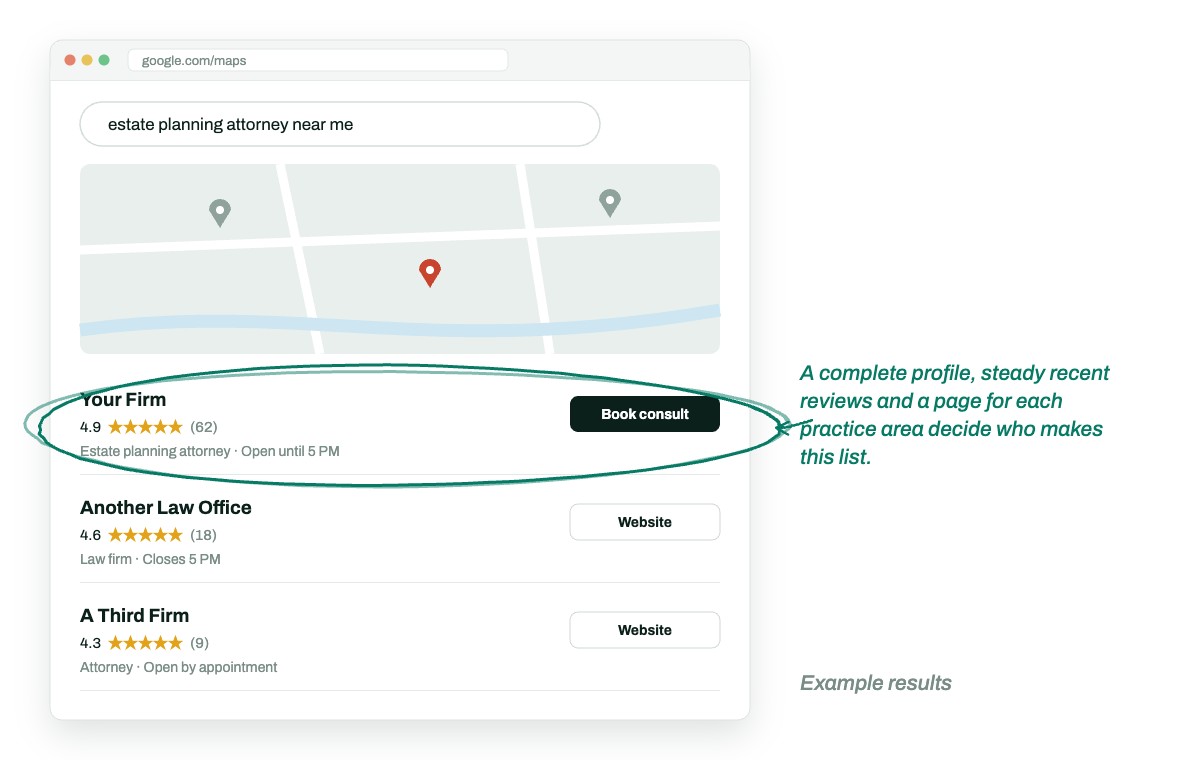
The short answer: Most people looking for a lawyer start on Google, often with a search like “estate planning attorney near me.” Firms that win those searches do four things well. They keep a complete Google Business Profile, build a page for each practice area and location, earn a steady flow of reviews within the ethics rules, and answer every inquiry fast. Ads can speed things up, but they work best once those basics are in place.
1. Start with the searches that turn into clients
Ranking for “lawyer” in your city is hard and rarely worth it. The searches that turn into consultations are specific: “DUI attorney” plus your county, “divorce lawyer near me,” “how much does a will cost in” your state.
List every practice area you want to grow. Next to each one, write the words a client would actually use, including plain-language versions. Clients search for “car accident lawyer,” not “personal injury litigation.” That list becomes your content plan.
2. Make your Google Business Profile complete and current
For local searches, the map results often appear before the regular listings. Google says local results are based mainly on relevance, distance and prominence.
- Choose the primary category that matches your main practice area, then add others that fit.
- Write a description that names your practice areas and the communities you serve.
- Add office photos and keep your hours accurate, including holiday hours.
- Use the Q&A and posts features to answer common questions.
- If you have more than one office, give each location its own verified profile.
3. Build a page for every practice area
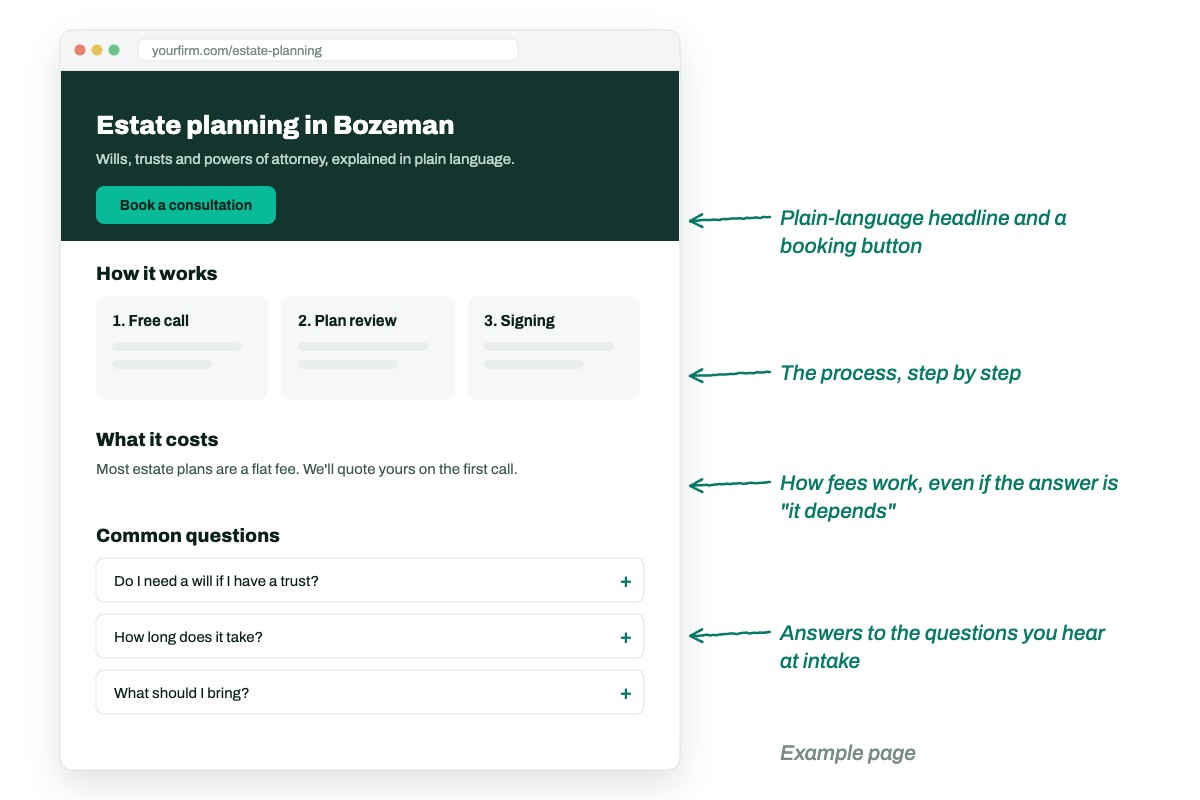
A single “Practice Areas” page with a list of bullet points can’t compete with a firm that has a detailed page for each one. Each practice area page should explain:
- Who you help and the problems you solve.
- How the process works, step by step, in plain language.
- What clients should bring to a first consultation.
- How fees work, even if the answer is “it depends on the matter.”
- Answers to the questions you hear most often.
If you serve several towns or counties, add location pages with genuinely local detail, such as the courts you appear in and the communities you work with. Avoid copying the same text and swapping the city name. Google treats that as thin content.
4. Earn reviews the right way
Reviews matter for ranking and for trust. A prospective client comparing two firms will often choose the one with more recent, detailed reviews.
Lawyers face rules most businesses don’t. Under ABA Model Rule 7.2(b), a lawyer generally may not give anything of value to a person for recommending the lawyer’s services, and state bars have applied that to online reviews. Google’s own policy also prohibits incentives for reviews and asking only happy clients.
That still leaves a lot of room:
- Ask every client at the end of a matter, using the same message for everyone.
- Send a direct link to your Google review page so it takes one tap.
- Never offer discounts, gift cards or fee credits in exchange for a review.
Be careful when replying. ABA Formal Opinion 496 concludes that a negative online review alone doesn’t allow a lawyer to reveal information about the client’s matter. For a review from a client or former client, the opinion suggests options like inviting the person to contact you privately, or saying that professional obligations prevent you from responding in detail. Rules vary by state, so check your state bar’s guidance.
5. Answer every inquiry fast
People with legal problems are often stressed and in a hurry. Many will contact several firms and hire the one that responds first. If calls go to voicemail during court appearances, you’re losing clients you already paid to attract.
- Set up missed-call text-back so callers get a reply right away.
- Send an instant confirmation when someone submits a contact form, with a clear next step.
- Offer online scheduling for consultations so clients can book without phone tag.
- Track every inquiry in one place so nothing slips between staff members.
6. Use content that answers real questions
Helpful articles bring in clients earlier in their search and show expertise. Good topics come straight from your intake calls: “What happens at a first DUI court date?”, “Do I need a will if I have a trust?”, “How long does a divorce take in” your state.
Keep every article accurate and current, and follow your state’s advertising rules for disclaimers. One clear, detailed article on a common question is worth more than ten short ones.
7. Add paid ads with care
Legal clicks are among the most expensive in search advertising, so ads need strong landing pages and tight targeting to pay off. Send each ad to the matching practice area page, run ads during hours someone can answer, and track every call to a signed client. Google Local Services Ads are also available for many legal categories and charge per lead instead of per click.
Law firm marketing checklist
- Complete and verify a Google Business Profile for each office.
- Build a detailed page for every practice area.
- Ask every client for a review, with no incentives.
- Reply to reviews without revealing client information.
- Turn on missed-call text-back and online scheduling.
- Publish articles that answer common client questions.
- Track inquiries to signed clients before scaling ad spend.
Law firm marketing questions
How long does SEO take for a law firm?
Google Business Profile improvements can show results within weeks. Practice area pages in competitive markets often take several months to rank well. Firms that start early and publish consistently see the strongest results.
Can lawyers ask clients for Google reviews?
In most states, yes, as long as the firm doesn’t offer anything of value in exchange and the reviews are genuine. Ask every client the same way, and check your state bar’s rules.
Should a small firm run Google Ads?
It can work, but legal clicks are expensive. Make sure your practice area pages and intake process are strong first, so you’re not paying for clicks that don’t turn into consultations.
This article is general marketing guidance, not legal advice. If you’d like help putting these steps in place, our law firm marketing team works with professional practices on search, reviews and intake. Book a free 20-minute growth audit.