18 Nov
The short answer: Slow nights are usually filled by people who already know you, not strangers. Build a list of regulars by email and text (with permission), give them a reason to come in on your quiet nights, and make it easy to book from Google. Then add recurring events people can plan around, keep your Google profile fresh, and use small, targeted ads to reach people nearby when you have something specific to promote.
1. Find out which nights really need help
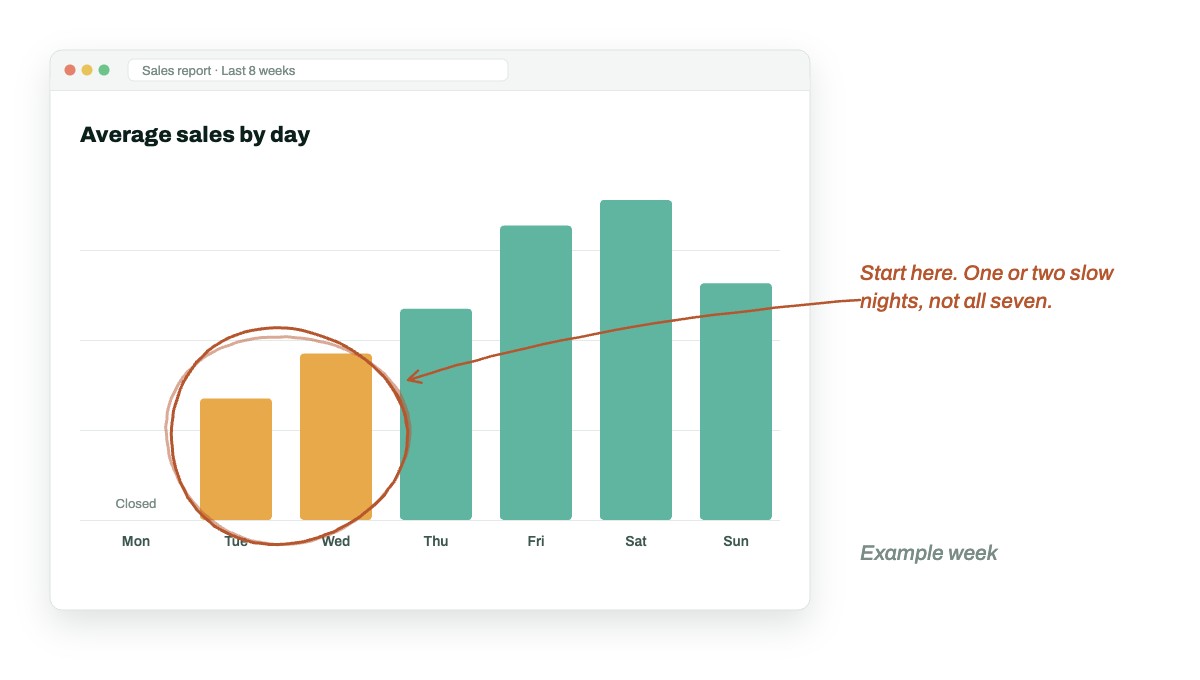
Before trying new ideas, pull a few months of sales from your point-of-sale system by day and hour. Most restaurants find the same pattern: one or two weak nights and a dead stretch in the mid-afternoon. Pick the one or two slots that matter most and focus there. Trying to fix every slow hour at once spreads your effort and budget too thin.
2. Build a list you own
Social media followers are useful, but you don’t control who sees your posts. An email and text list lets you reach regulars directly when you need to fill a Tuesday.
- Offer a simple sign-up at the host stand, on receipts, on table cards and on your website.
- Collect sign-ups through your reservation and online ordering systems.
- Give a clear reason to join: first look at new menus, event announcements, a birthday offer.
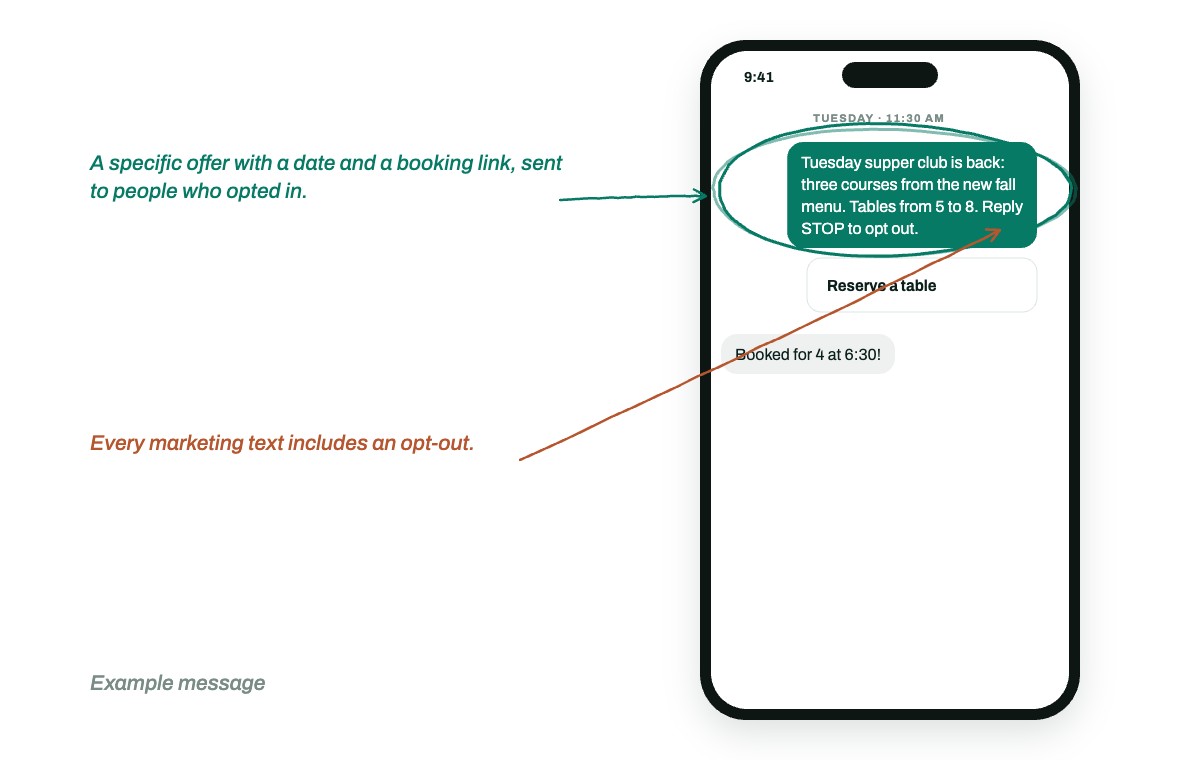
For text messages, get written permission first. Federal law requires prior express written consent for promotional texts, and your texting number must be registered with the carriers. Most restaurant marketing tools handle both if you set them up correctly.
3. Give regulars a reason to come in on the quiet night
A message that just says “come see us” rarely works. Give people something specific and time-bound:
- A weeknight special that only runs on the slow night, like a two-course menu or a featured dish.
- A chef’s or brewer’s preview of a new seasonal item before it hits the regular menu.
- A neighborhood night that recognizes a local school, team or business, with a portion going to a cause.
- A birthday or anniversary offer that brings people in during the month they celebrate.
If you serve alcohol, check your state’s rules before promoting drink specials. Some states restrict happy hour pricing and certain kinds of promotions.
4. Create recurring events people can plan around
A one-off event fills one night. A weekly or monthly event turns a slow night into a habit. Trivia, live music, a supper club, a cooking class, an industry night or a monthly pairing dinner all work if they fit your space and your crowd.
List every event on your website, your Google Business Profile and your social channels, and send a reminder to your list the day before.
5. Make booking easy from Google
Many diners find a restaurant on Google Maps and decide within minutes. If they can’t see your hours, menu and a way to book, they move on.
- Keep hours current, including holiday and special-event hours.
- Upload your current menu and update it when it changes.
- Add fresh photos of dishes, drinks and your space every month.
- Connect a reservation platform that partners with Google so a “Reserve a table” button appears on your profile.
- Use Google posts to promote this week’s special or upcoming event.
6. Answer every call, even during the rush
During a busy dinner service, the phone often goes unanswered. That’s a reservation, a large party or a catering order going to someone else. Missed-call text-back sends the caller a quick text with your reservation link and a promise to call back, so the conversation doesn’t end at voicemail.
7. Use targeted ads for specific promotions
Paid ads work best when you have something specific to promote. A new menu, a holiday event or a private dining package gives people a reason to click. Meta ads can target people within a short drive of your location, and Google ads can reach people searching for “private dining” or “brunch near me.” Keep budgets small, run them for a set period, and measure reservations and covers, not likes.
8. Turn first-time guests into regulars
The cheapest guest to bring back is one who just visited. A short thank-you message a day or two after a reservation, with a link to leave a review, keeps you top of mind. A follow-up a few weeks later with an invitation to an upcoming event gives them a reason to return.
Slow night checklist
- Pull sales by day and hour and pick one or two slow slots to fix.
- Grow an email list and a permission-based text list.
- Create a specific weeknight offer or event.
- Keep your Google profile updated with hours, menu, photos and a booking button.
- Turn on missed-call text-back.
- Run small, time-limited ads for specific promotions.
- Follow up with first-time guests.
Restaurant marketing questions
What is the best way to bring in customers on slow nights?
Reach people who already know you. A weeknight offer or recurring event sent to your email and text list usually works better and costs less than ads aimed at strangers.
Do discounts hurt a restaurant’s brand?
Constant discounts can. A special that adds value, like a preview menu or a pairing night, often works better than a straight percentage off, and it gives people a story to tell.
How often should a restaurant email or text its list?
Often enough to stay in mind without becoming noise. For many restaurants, a weekly or every-other-week email and a few texts a month for timely offers is a good place to start.
Want help filling your slow nights? Our restaurant marketing team builds lists, campaigns and Google profiles for restaurants, breweries and retail shops. Book a free 20-minute growth audit.